
Revisiting Dream House
A Conversation with Kathy Ryan

The following is an excerpt from a 2008 conversation between Gregory and Kathy Ryan. At that time, they were reflecting on the making of Dream House just six years later in 2002. Kathy was Director of Photography for The New York Times Magazine from 1987 until 2024.

Gregory: Looking back, I remember very distinctly getting a phone call from you saying The New York Times Magazine was instituting a new portfolio project. And you asked me if I would consider doing something for that.
Kathy: That’s right. Adam Moss had decided that it would be interesting if, several times a year, we published a portfolio in the magazine that kind of stood apart. A chance to commission and publish photography in a kind of broader arena. It was just a great opportunity where we were being given the pages to do something very special photographically. And I called you because, right away, I just thought, ‘wow, this could be fabulous,’ knowing your work and the kind of cinematic, narrative, clearly magnificent, artful quality of it might lend itself to this, and this would be a chance to commission you to do something that could live both as your art project and also work well within the magazine structure, that we would have the pages to do it justice and the wherewithal to kind of produce something special.
Gregory: I remember distinctly that the timing was very good, because I had just finished the Twilight photographs. I was in a bit of a transitional period. I’ll always remember the lunch we had together where we met at, what’s the fish restaurant again, on 43rd Street?
Kathy: Esca.
Gregory: Esca, yes. We met there for lunch. In June. I did have some hesitations because I don’t typically do editorial work and I hadn’t done any magazine work such as this. But I was interested in the proposal and also that it was a portfolio of pictures.
Kathy: I also had trepidation asking you, of course, because normally you wouldn’t be working on assignment for a magazine, but it seemed like we had this kind of new special form.
Gregory: I think we were brainstorming and putting ideas together, concepts, and I think you were the one who asked me if I’d consider photographing well-known actors.
Kathy: And I was thrilled you were open to that idea, because I had been concerned thinking you would say, ‘no, no, no, I don’t want anybody who’s recognizable.’
Gregory: We then sat down and wrote a list of actors that potentially might work for this. I always sort of saw it as, like, actors who I felt could inhabit my world, rather than me inhabiting their world. And also, of course, actors that I respected and admired. So I think in that original lunch, we came up with a list, a kind of wish list of actors. And then I had this concept of setting it in and around a house in Rutland, Vermont, which I think was the big stretch. I had been working in Rutland the previous year, and someone who worked on my production had shown me this house, and I thought, my God, this would be a great location for a project. It was like a mausoleum. The woman who owned the house had died 10 or so years before, but they left it completely intact with all the letters and clothes.

Kathy: And I remember even the hand towels. Like the sort of hand towels from the 70s were still in the bathroom.
Gregory: Exactly.
Kathy: There were just little details everywhere of a certain time period. They remained untouched in that white kind of Leatherite couch. There was fabulous furniture. But of course, our concern was clearly that the odds of getting top actors and actresses to go six hours north of Manhattan to Vermont were like one in a million.
Gregory: And we entertained some other ideas…
Kathy: …If we had to go to Plan B. You mentioned using a sound stage in Manhattan. We were trying to figure out if we had to do it closer to home, which at that point was really the much more realistic approach to take. But luckily, we took the unrealistic one.
There was something in that house that was calling to you…
Gregory: I think that’s when the magic came into the project.
Kathy: And you knew that. I just remember right from the beginning that house was a kind of catalyst. There was something in that house that was calling to you, and you knew if we could get the actors there—it’s like it had an authenticity, because it actually was a house with people’s actual things, and for some weird reason it was kept intact, you could just bring these actors into it. It was like a totally Crewdson-esque environment. If we could just get them to make the journey, if it magically happened, you’d have some sparks flying.
Gregory: It had an authenticity, but it also had a kind of haunting quality. which is also something I responded to and it’s like there was a presence and all that absence there and a strangeness and so I knew that that location—that setting—had this great potential for mystery and drama.
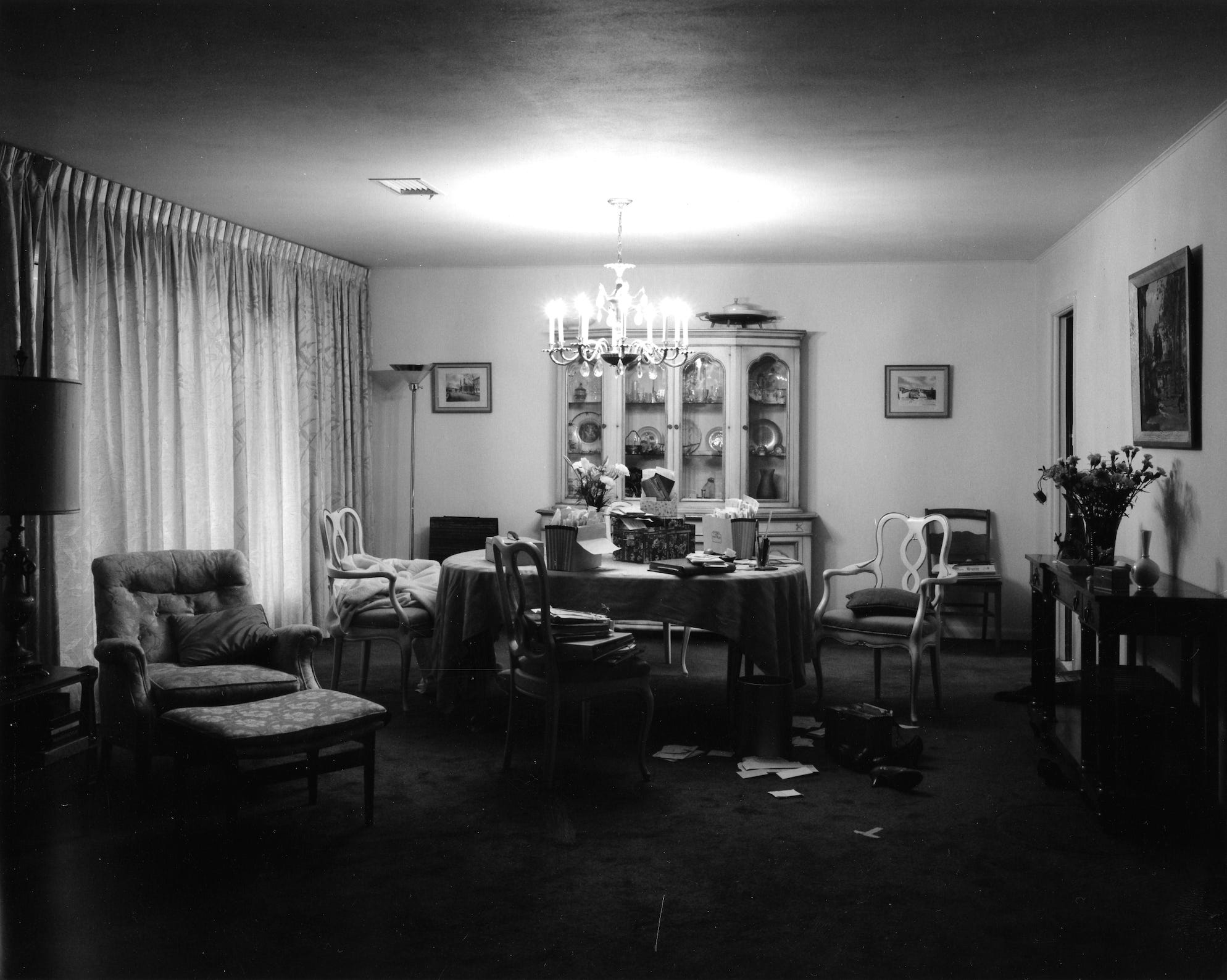
Kathy: And it presented a number of scenarios for you because you had the interiors in the house, you had exteriors, you had the surrounding streets…
Gregory: …so then the big task at hand was doing it. One of the great things was that we had The New York Times Magazine and all the resources behind us to approach the actors.
Kathy: …To approach them, yeah. I remember it was a big moment then of swinging into gear. I mean, most actors are accustomed to going to a studio and several hours of hair and makeup, an hour or two of actual photographing, and they’re done. And here we were saying to them, “would you go all the way to Vermont, spend a full day, if not a day plus an overnight,” because some spent two. And that’s a lot to ask. And yet, in the end, life is funny because by asking that, we did the best possible thing.
Gregory: And I think without exception, they all came up alone, typically, without any PR or hair and makeup.
Kathy: It ended up very low-key. I mean, clearly the lighting outranked any kind of lighting I’d ever seen on a still photo shoot in my career again—it was more like a movie set—but in another way, it was charmed, you could just see once actors were there, they loved that they were getting to inhabit a role. You were completely in director mode because you had already figured out the scenario in your mind’s eye right down to the cup on a table or the lampshade… You knew every inch of what you wanted in that frame, and actors like that, I think. They like that it’s thought out to that degree.
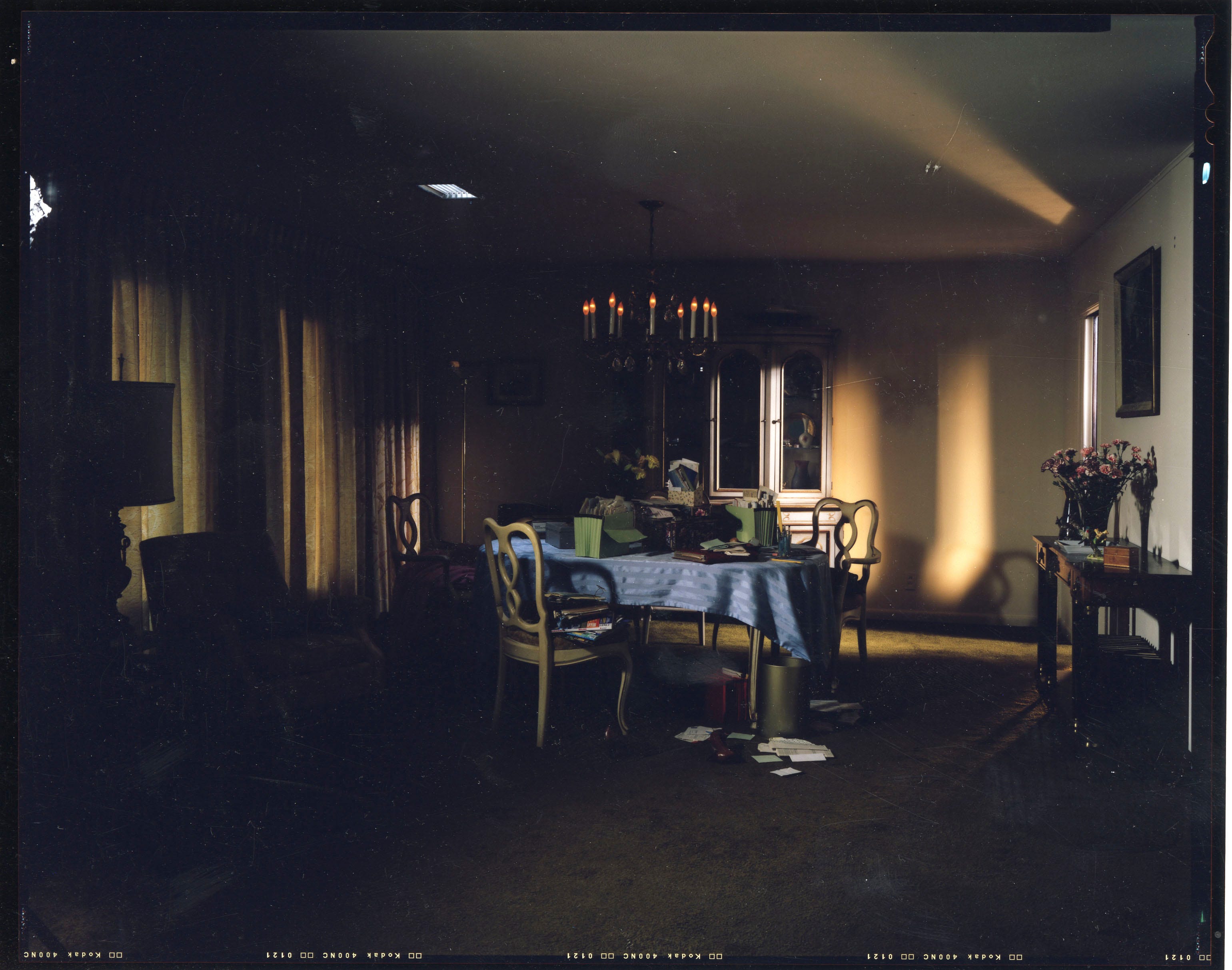
You were basically asking all the actors to be mute, and you didn’t want them to emote particularly either. And I remember that was interesting. There was a funny moment when Philip Seymour Hoffman was sitting in the car for his shot, and you went up and you said something like, I don’t want you to act. And as you walked away, he muttered, “I get it, okay, I get it, don’t act. I’m an actor, but I’m not supposed to act.” So they were also being asked to do something a little bit different than what they normally do. So that was another sort of interesting twisting of the forms of the medium and making something new, I think.
Gregory: Basically, a lot of that came from just my general procedure. By the time the actor came up, I had a very clear concept of exactly what I wanted. The framing, the position, the dress and the costume. The first photograph we did was the one with Gwyneth Paltrow. I remember I was quite nervous because it was the first photograph, and when she was driving up, there was this huge thunderstorm right before we made the picture. But as soon as she got there, I told her my concept for the photograph and she completely got it. I remember my only real instruction to her when she was posing for that picture was—I would just say over and over again “more shame.”
Kathy: More shame, wow…
Gregory: That was really my only directorial note “more shame.”
Kathy: That’s right, and she delivered it. She knew exactly what you wanted, and she was definitely into conjuring that emotion. But it wasn’t easy in the small house with all the lights, it was very hot, and felt intense. There’s lots of fear, which drives it to an even better place. There’s that kind of anxiety. I remember you pacing up and down. And the thunderstorm was happening, and those huge lights that were mounted outside–and it was a real question whether the entire thing was going to come crashing down before you ever made a picture. We were all going on faith. And then it was thrilling to see Gwyneth Paltrow drive up herself and say “I’m here to do this.”
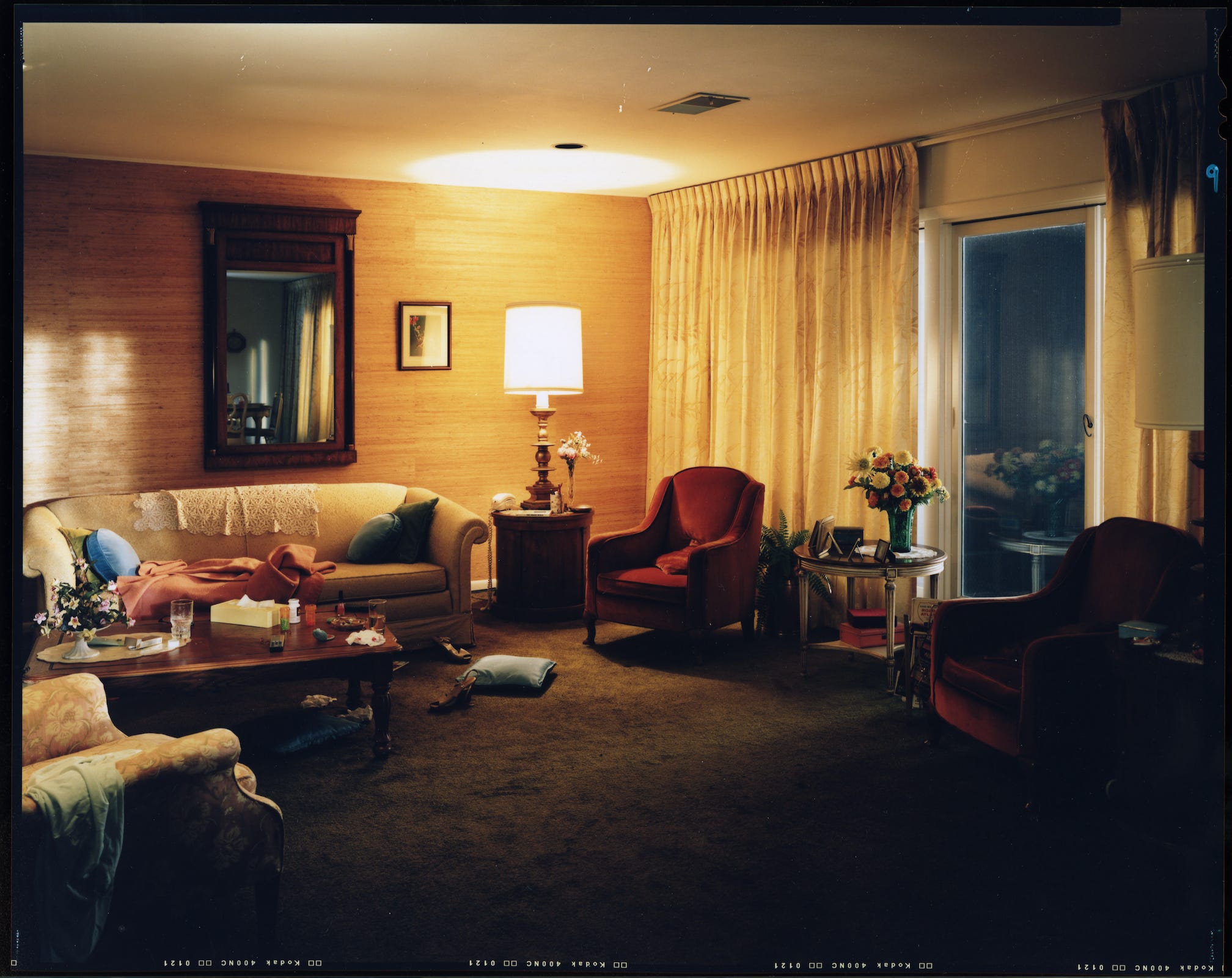
Gregory: It felt like a magical adventure to me. We pushed the limits of things in a certain way and created an original situation where something creative could happen.
Kathy: It was so much fun. We were like kids at camp.
Gregory: I hope that the pictures will have a kind of longer and larger life.
Kathy: I believe they will. Each of them represents something, whether it’s the shameful daughter in front of her mother, the Gwyneth Paltrow picture–or the one with Julianne Moore on the edge of the bed–they all have a kind of unnamed emotion. You somehow tapped into a kind of communal, psychological undercurrent. And that was in all of them. And because these actors were all so present and willing to inhabit your world they were able to really bring it home for you. It’ll be interesting to look at the pictures years from now and see how they feel different, or how they’ve remained the same.
Gregory: It was very important to me when we made the selection of the actors, that there had to be some sense of mystery within them. And so that’s why I felt so comfortable doing the work. I mean, Tilda Swinton, she is so beautiful, yet so alien, and almost kind of inaccessible in a certain way, you know, and all the actors in one way or another have that. And then Philip Seymour Hoffman and William Macy, both of them have a different kind of quality, which is like a kind of defeated almost or…
Kathy: rumpled every man…
Gregory: repressed…
Kathy: That”s right. They’re not leading men at all–dare I say that they’re similar in ilk to you?
Gregory: (laughs.) I never thought of that.
Kathy: You could be them.
Gregory: Yes, I feel that.
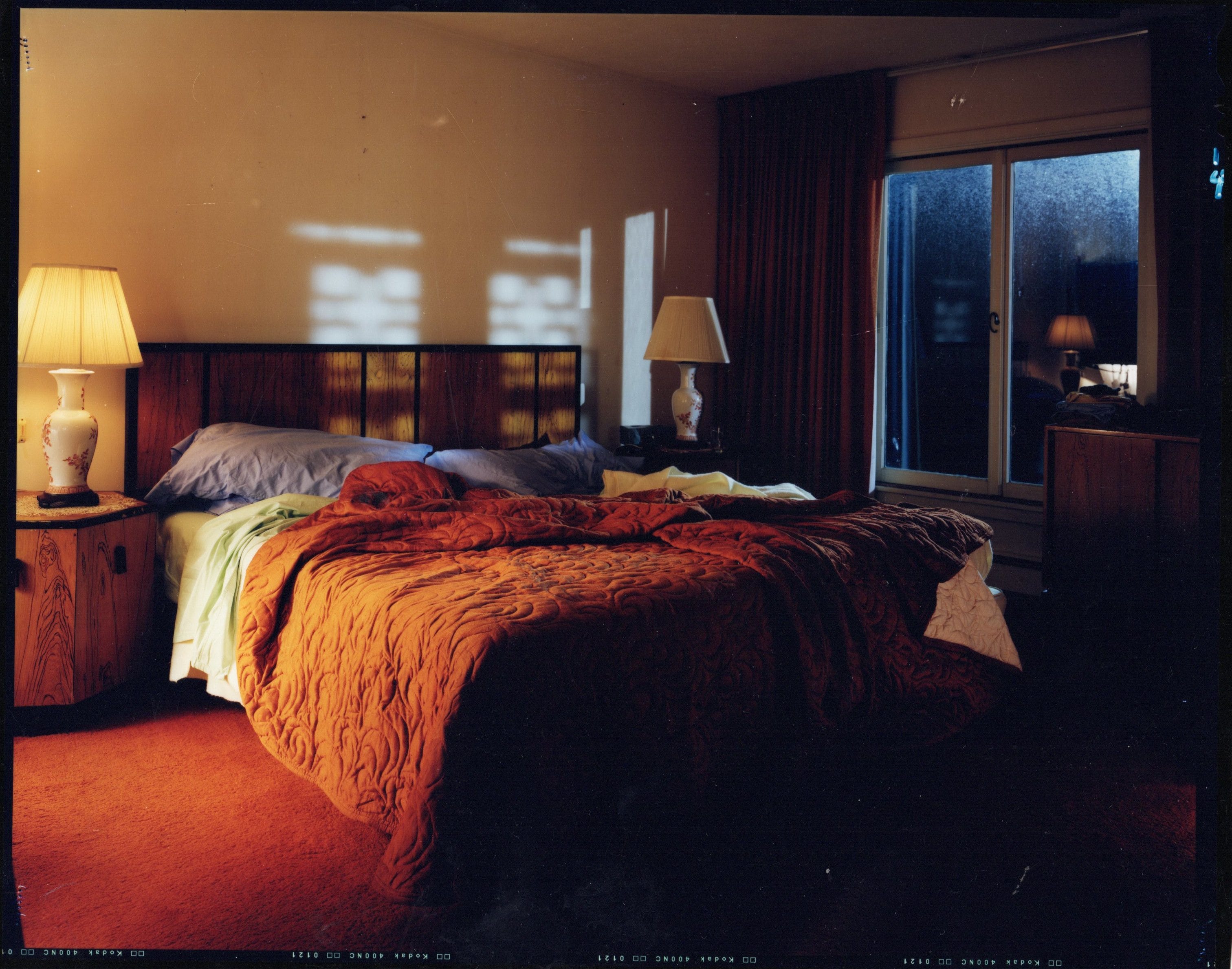
Kathy: I was also intrigued by how you could keep some things in the house just as they were, which lent that air of authenticity and realism to it, but then you would know exactly what you wanted palette-wise. So if you needed different sheets on the bed for the picture with Julianne Moore, you got those sheets.
Gregory: Right.
Kathy: And that changed everything, so that you had just the right peachy color juxtaposed with a blue color with a green color. So there’s like tons of stuff happening just with the palette. At the same time, you leave other things as they were because that also just gave it, you can overdo stuff and you never do. It always seems so vividly real because you know that fine line between too polished and real, but you’ve quietly coaxed it along by shifting some things to make stuff happen for you. And then some things just work. I remember that turquoise blue coat, the raincoat that Tilda wore.
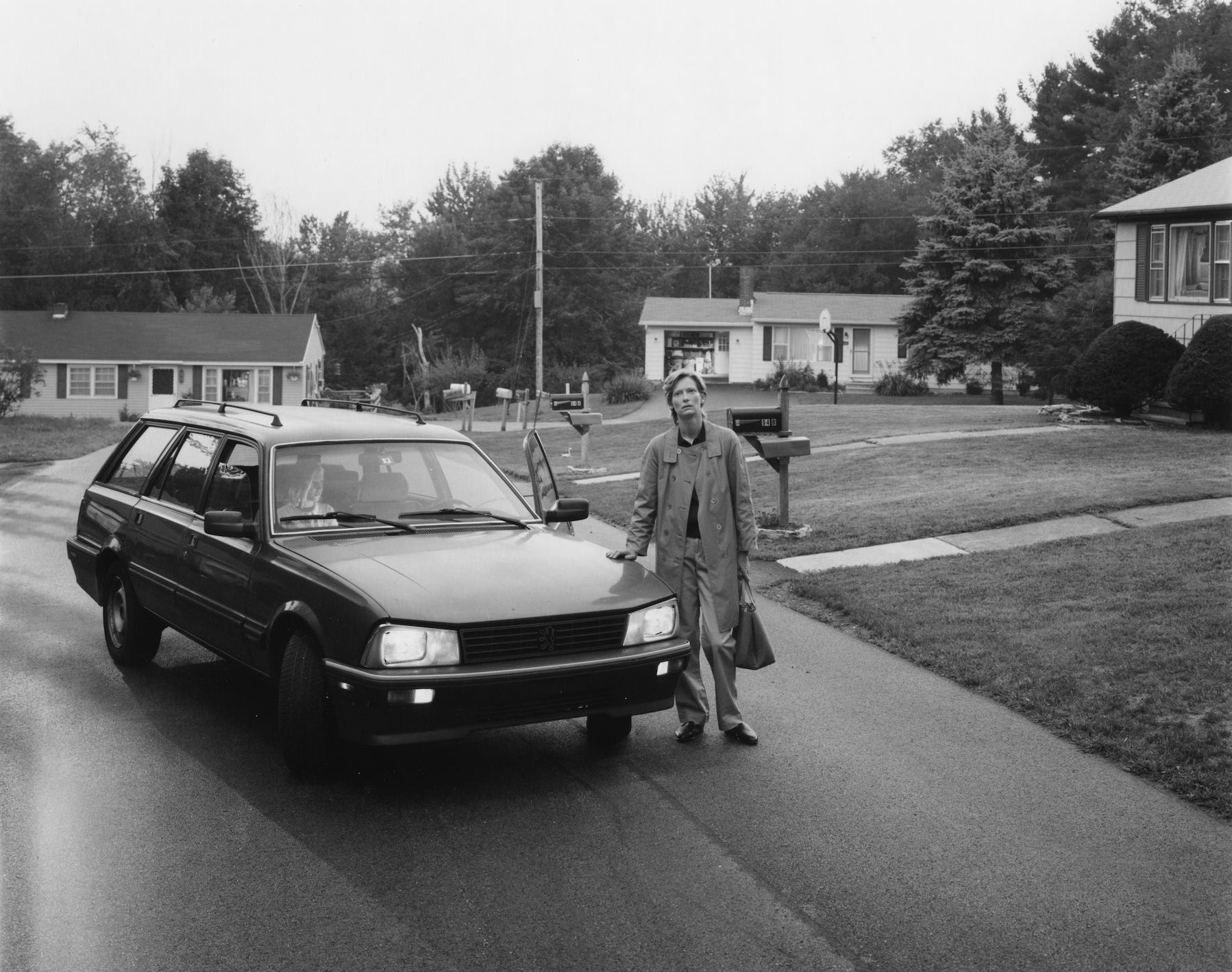
Gregory: In the exterior.
Kathy: …That Emily [Rebholz, who did costumes on the project] had found in a thrift store. It was just a coat out of a pile of coats that had been looked at in a thrift store. And somehow you knew that specific one completely defined the character. And Tilda felt that. I remember she put it on and she’s like, wow, I love this coat. I love that you were able to balance those kinds of elements.
Gregory: In the end, I think the pictures reflect everything we were talking about. Those strange contradictions, the sense of wonder, the adventure, all these things sort of help create this, I think, a really beautiful and very defined project that stands completely on its own. The pictures continue to have a life. They challenged me in terms of my own work in unexpected ways. So I want to thank you for that. It was a great experience working with you on that.
Kathy: Yes. It was.

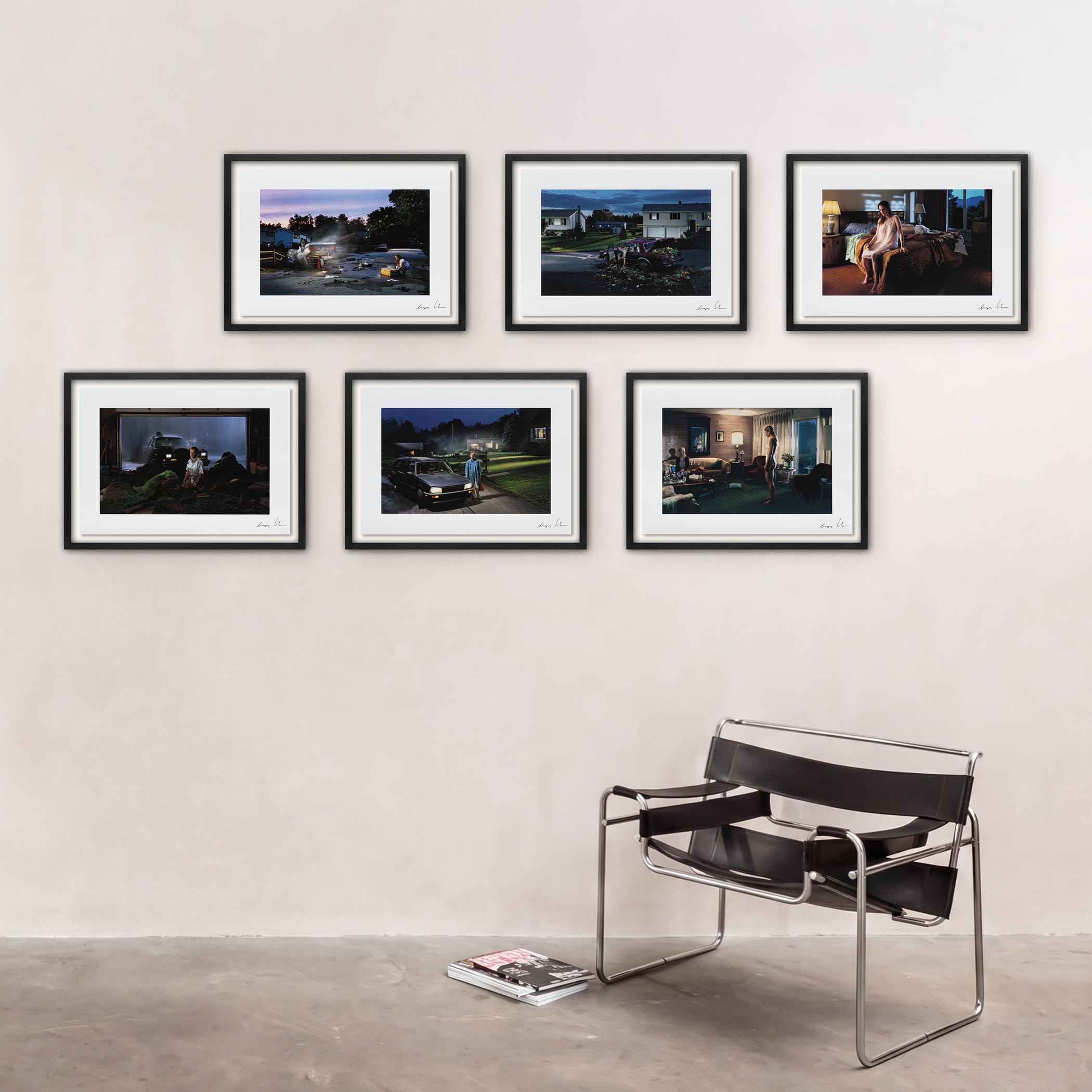
In anticipation of the 25th Anniversary of Dream House, Avant Arte is hosting the release of a limited edition special edition. Crewdson Trail Log readers can have an advance look by clicking here.
The Crewdson Trail Log is edited by Juliane Hiam.